
A missing tooth can seem like a small gap at first, especially if it is not always visible when you smile. Over time, though, that gap can affect how you eat, how clearly you speak and how comfortable you feel in everyday situations.
Tooth loss is common, and it is not something to feel embarrassed about. What matters is understanding what has changed in your mouth, why it can affect daily life, and how the right replacement option can help restore function, comfort and self assurance.
Why missing teeth affect more than appearance
Teeth work as a team. Each tooth has a role in biting, tearing, chewing, guiding the jaw and supporting the soft tissues around the mouth. When one or more teeth are missing, the balance of that system changes.
A gap can alter the way your remaining teeth meet when you bite. Nearby teeth may begin to carry extra pressure, and some people start chewing more on one side without realising it. This can make meals feel less natural and may place strain on teeth that were not designed to do all the work alone.
The position of the missing tooth also matters. A missing front tooth may have a bigger effect on speech and smiling, while a missing back tooth can have a greater impact on chewing strength. Multiple missing teeth can affect the way the jaws close together and how supported the cheeks and lips feel.
Replacing missing teeth is not only about closing a visible space. It is about helping the mouth work more comfortably again. Portland Street Dental explains the main ways to replace missing teeth, including options that may support chewing, appearance and everyday confidence.
The effect on chewing and food choices
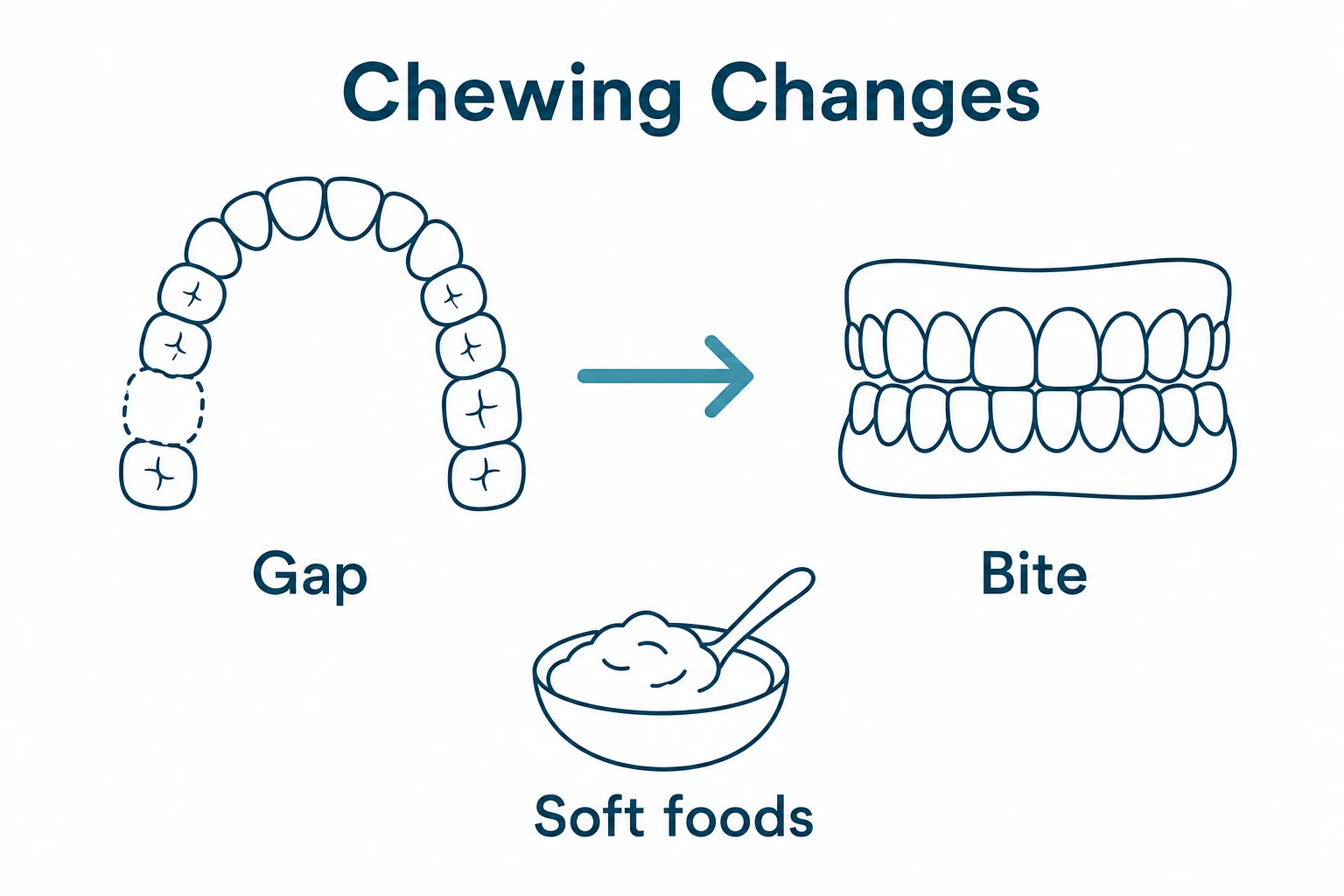
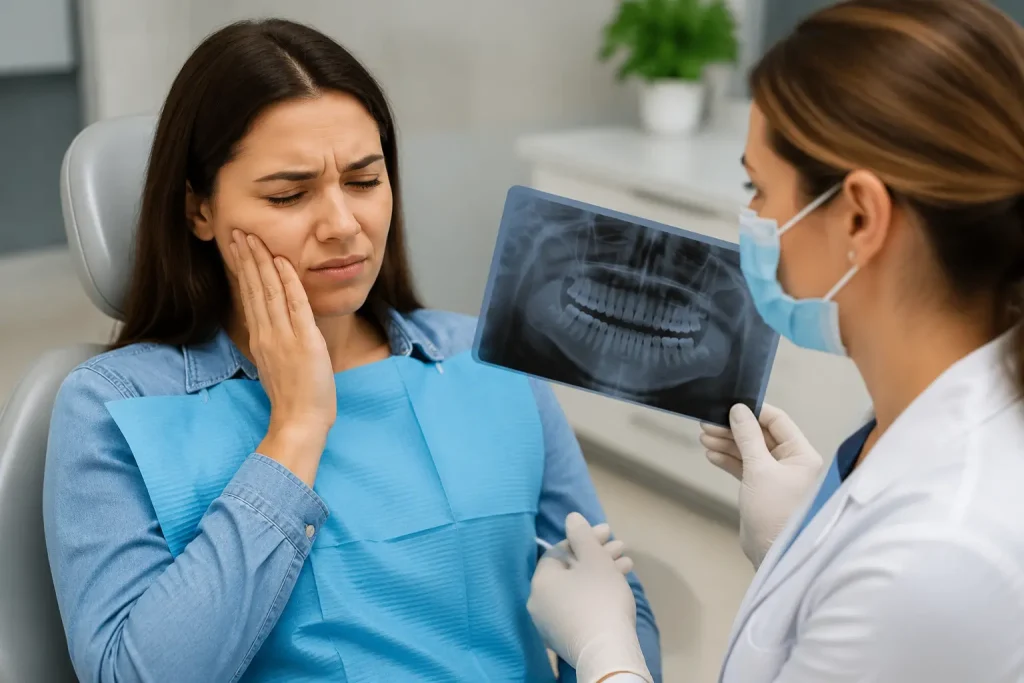
Chewing is one of the first things people notice after losing a tooth. You may find yourself avoiding certain foods, cutting food into smaller pieces, chewing slowly, or moving food to the opposite side of the mouth. These changes can feel minor at first, but they can become frustrating when meals start to feel restricted.
Back teeth are especially important for grinding food properly. When one is missing, tougher foods can feel harder to manage. Crunchy foods may feel awkward. Fibrous foods may take longer to chew. If several teeth are missing, some people begin to avoid foods they used to enjoy because eating no longer feels predictable.
There is also a comfort issue. If food packs into a gap, the gum can feel sore or irritated. The tongue may keep exploring the space, and the area can become a constant distraction. When chewing pressure is uneven, other teeth may feel tired or sensitive, particularly if they are taking more load than before.
Professional tooth replacement can help distribute biting forces more evenly. Depending on your mouth, this could involve a bridge, denture, implant, or another carefully planned approach. The aim is not simply to make eating possible, but to make it feel calmer, steadier and more natural.
How tooth loss can change speech
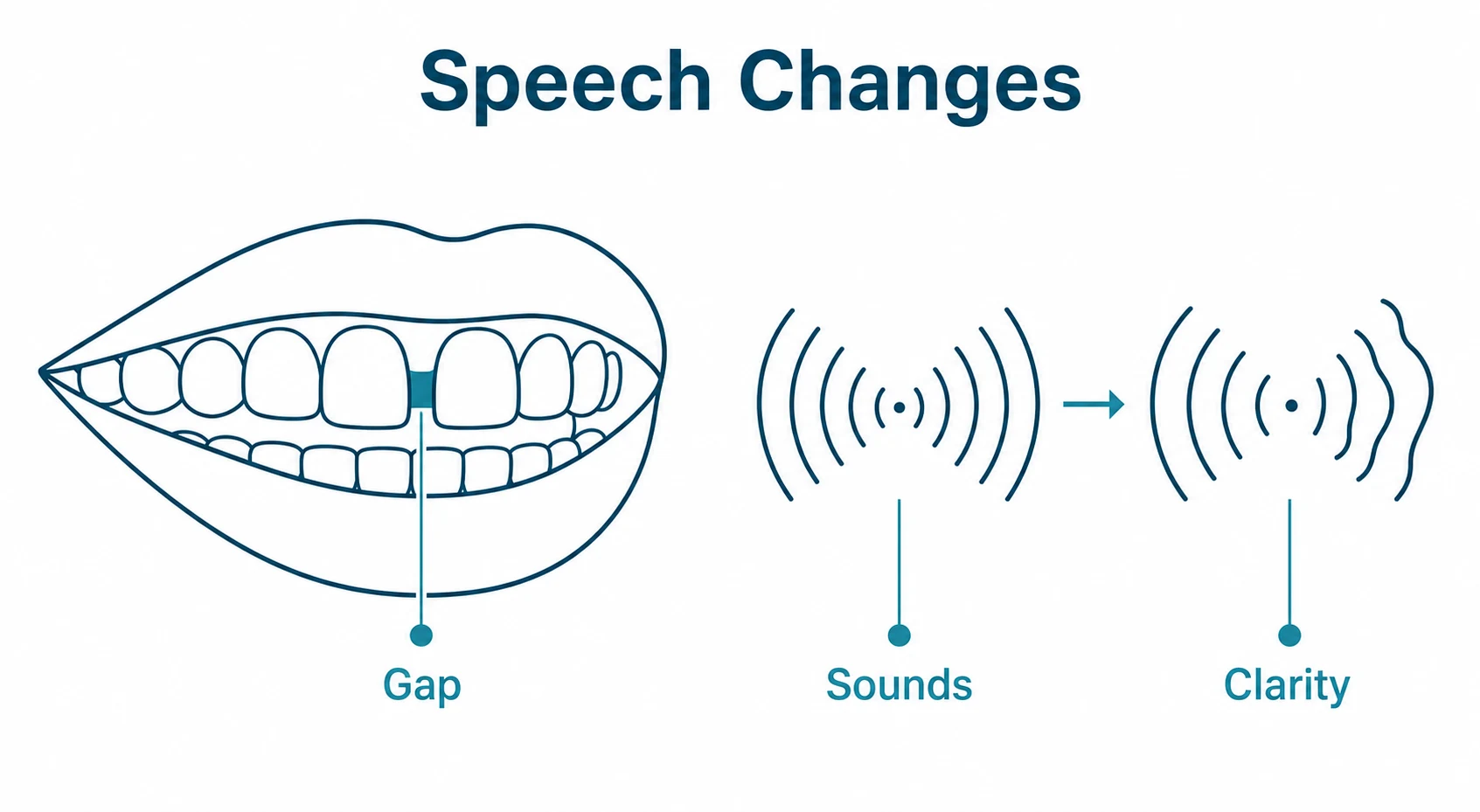
Clear speech depends on more than the tongue and lips. Teeth help shape certain sounds by providing contact points and airflow control. When a tooth is missing, especially near the front of the mouth, some sounds may become less crisp.
You may notice a slight lisp, a whistle, or a change in how words feel when you say them. Sounds that rely on the tongue meeting the teeth can become more difficult. Some people adapt quickly, while others feel self conscious because they can hear the change themselves, even if other people do not mention it.
Speech changes can also happen when several teeth are missing at the side or back of the mouth. The tongue may move differently to compensate for gaps, and the lips or cheeks may feel less supported. This can subtly affect pronunciation, volume and confidence when speaking.
A well planned replacement can help restore the shape and support that speech relies on. There may be a short settling in period with some treatments, but many people find that improved stability and tooth position help them speak more comfortably again.
Confidence, social comfort and daily habits
The emotional effect of missing teeth is easy to underestimate. Some people become skilled at hiding the gap, smiling with closed lips, turning their head in photographs, or avoiding certain social situations. Others feel fine most of the time, then suddenly feel exposed when laughing, speaking closely, or eating with others.
Confidence is not vanity. Being able to smile, talk and eat without constantly thinking about your teeth can make daily life feel easier. When a missing tooth affects how you present yourself, it can influence work conversations, social plans and even simple moments like ordering food or chatting with friends.
It can also affect how people feel about seeking dental care. If a gap has been there for a while, it is common to worry that treatment will feel complicated or that the dentist will judge. A good dental consultation should do the opposite. It should give you a calm explanation of what is happening, what your options are, and what would suit your mouth, health and priorities.
For some people, replacing a missing tooth brings the biggest change in how they eat. For others, the main benefit is being able to smile without planning how to hide it. Both are valid reasons to explore treatment.
What can happen if a gap is left untreated
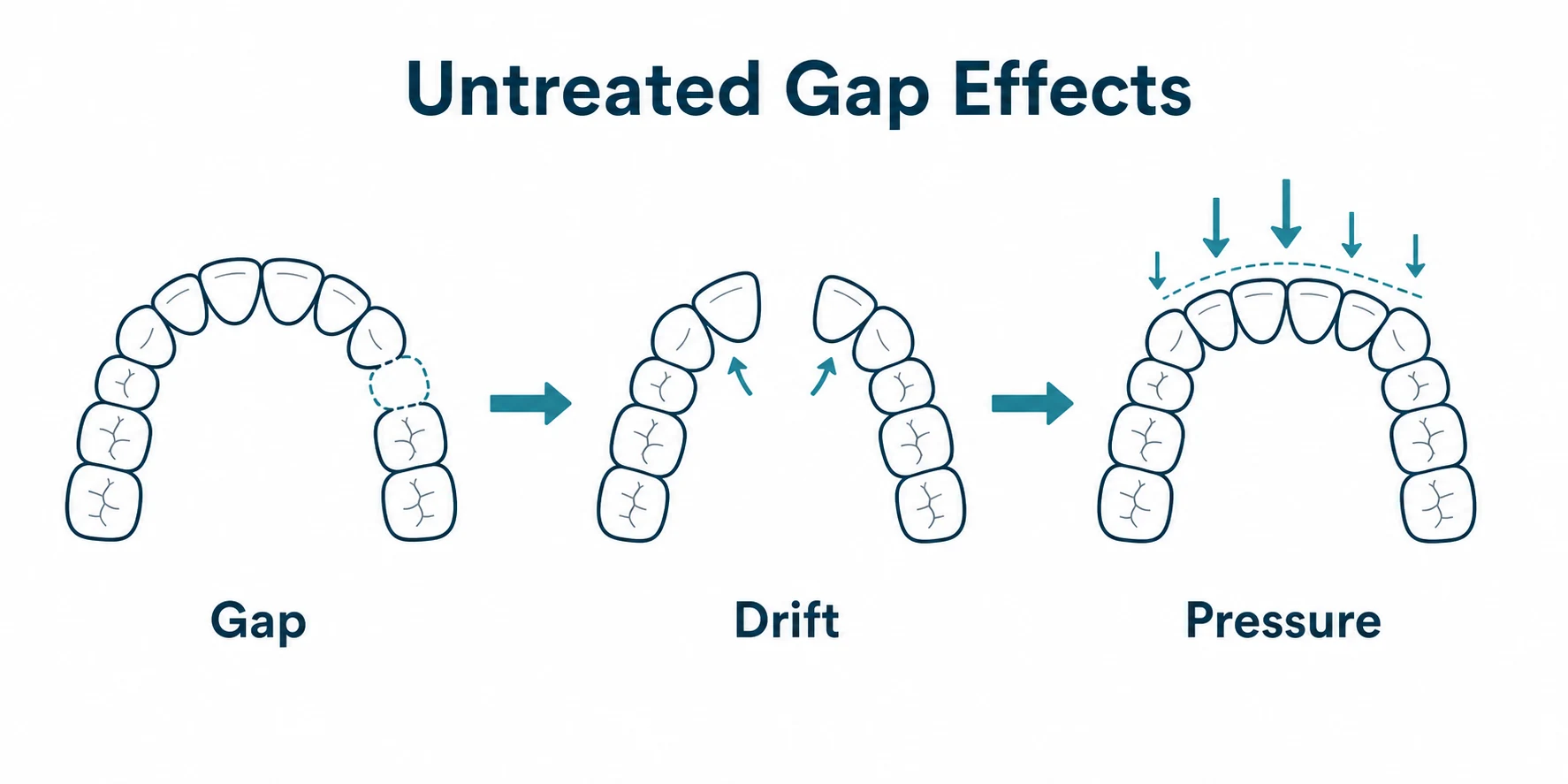
Not every missing tooth causes immediate discomfort, but a gap can still influence the mouth over time. Teeth next to the space may gradually tilt or drift. A tooth in the opposite jaw may move further into the gap because it no longer has a partner to bite against. These changes can affect the bite and may make later treatment more involved.
Gaps can also trap food and plaque. This may make cleaning more difficult, particularly if the space is narrow or awkward to reach. Keeping the area clean is important because the surrounding teeth and gums still need protection.
Jaw comfort can also be affected. If your bite changes, your jaw muscles may work differently. Some people clench more on one side or develop chewing habits that feel uneven. This does not mean every gap leads to jaw symptoms, but it is one reason a professional assessment is useful.
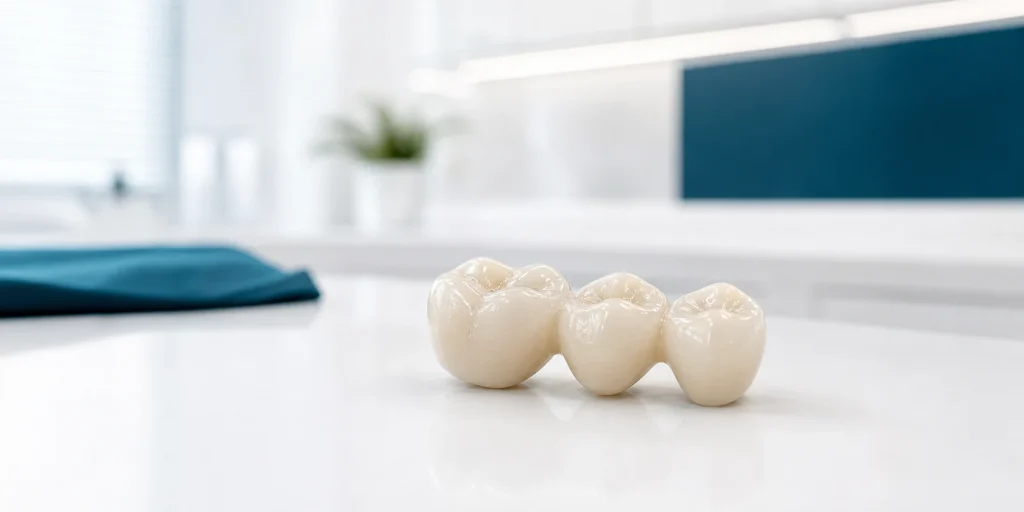
If you are missing one tooth, a bridge may sometimes be considered where the neighbouring teeth can support it. Portland Street Dental has a helpful guide on whether a dental bridge can replace one missing tooth, which explains when this approach may be suitable.
How professional replacement options help restore function
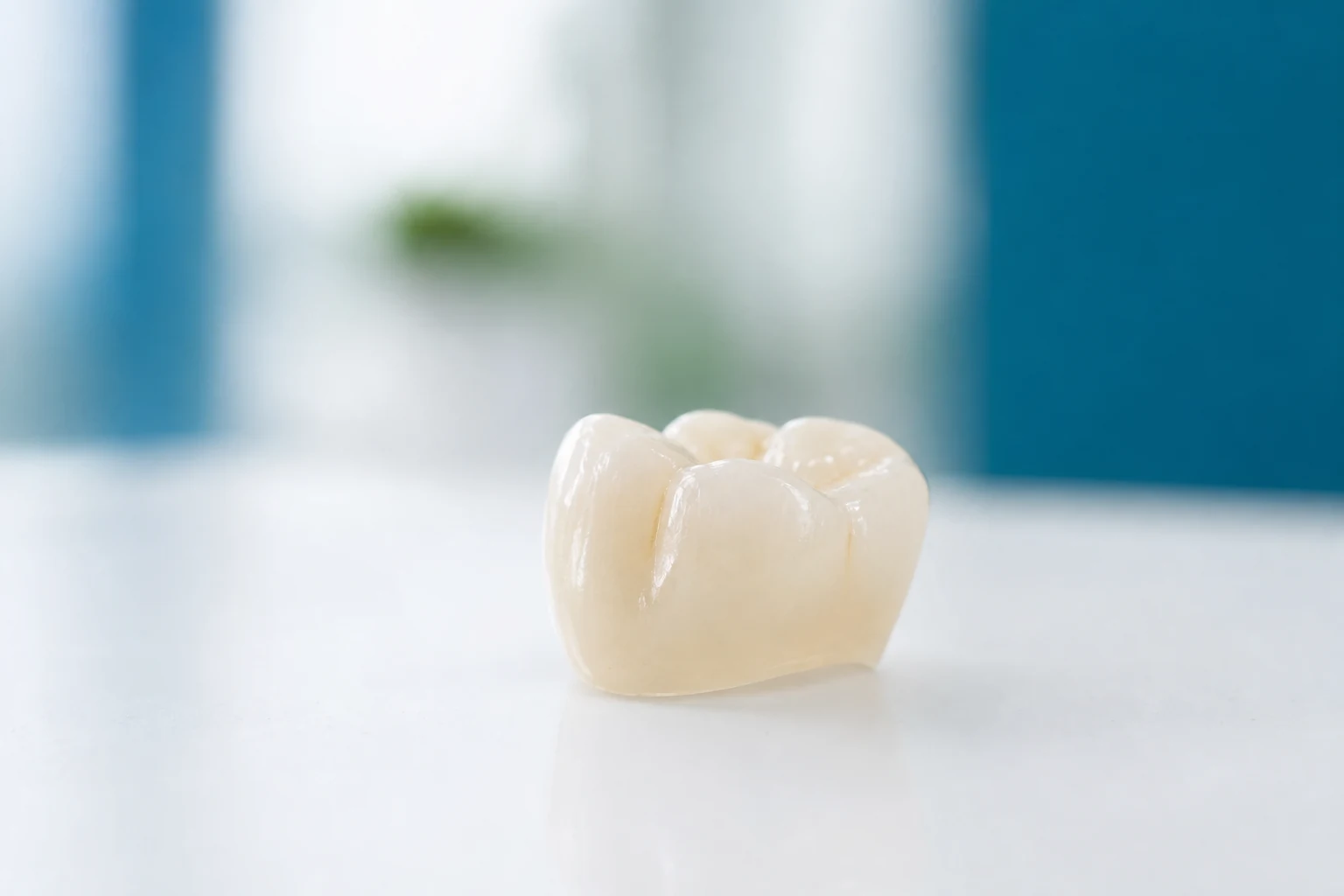
The best replacement option depends on the number of missing teeth, the health of the surrounding teeth and gums, the strength of the bone, your bite and what you want treatment to achieve. There is no single answer that suits every mouth, which is why assessment matters.
Dental bridges can fill a gap by using support from neighbouring teeth or other planned structures. Dentures can replace one or more teeth and may be suitable in a range of situations. Dental implants can replace tooth roots and support crowns, bridges or dentures, depending on the case. Each option has its own strengths, and the right choice should be explained clearly before treatment begins.
Replacement teeth are designed to help with practical daily function. That means improving chewing contact, supporting the bite, helping speech feel more natural and restoring the look of the smile. Good planning also considers cleaning, comfort and how the replacement will work with the rest of your mouth.
If implants are being considered, it can help to understand the stages involved. The guide to what happens during the dental implant process gives a useful overview without assuming that implants are the only option.
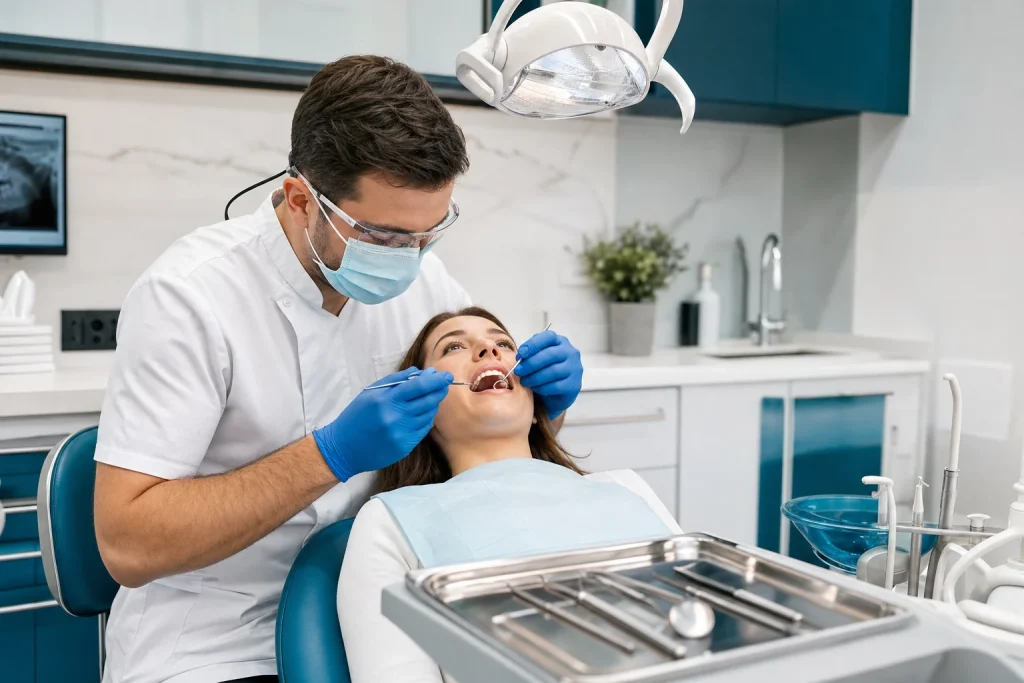
The most reassuring part of a consultation is often realising that you do not have to decide alone. A dentist can examine the gap, check the bite, discuss your priorities and explain which choices are suitable. The goal is to restore comfort and confidence in a way that feels right for your mouth.
- Missing teeth can affect chewing, speech, bite balance and confidence, even when the gap is not always visible.
- Many people adapt their eating habits without noticing, such as chewing on one side or avoiding certain foods.
- Speech can change when teeth that help shape sounds are missing, especially near the front of the mouth.
- Leaving a gap untreated may allow nearby teeth to shift, which can affect the bite and make cleaning harder.
- Professional replacement options can restore function, comfort and self assurance when they are planned around your individual needs.
Frequently asked questions
Can one missing tooth really affect how I chew?
Yes. Even one missing tooth can change how biting pressure is shared across your mouth. You may start chewing more on one side or avoid certain foods, especially if the missing tooth is near the back of the mouth.
Will a missing tooth affect my speech permanently?
Not always. Some people adapt quickly, while others notice ongoing changes to certain sounds. Replacing the missing tooth can often help restore the shape and support that clearer speech depends on.
Is it worth replacing a missing tooth if it is not visible?
Often, yes. A hidden gap can still affect chewing, bite balance and the position of surrounding teeth. A dental assessment can show whether replacement would protect comfort and function.
How do I know which replacement option is right for me?
The right option depends on your gums, remaining teeth, bone support, bite and personal priorities. A dentist can explain whether a bridge, denture, implant based option, or another approach is most suitable.
Ready to talk through your options?
If missing teeth are affecting how you eat, speak or smile, Portland Street Dental can assess your mouth and explain your replacement options clearly and calmly.