Most changes in the mouth are harmless, but some deserve a closer look. The difficulty is knowing which ulcers, patches, lumps or sore areas should be checked professionally.
Your dentist is well placed to examine the soft tissues of the mouth, not just the teeth. A calm, thorough screening can offer reassurance and, where needed, a clear route for further assessment.
Why dentists check more than your teeth
During a dental examination, your dentist looks at the gums, tongue, cheeks, lips, palate, floor of the mouth and throat area. These tissues can show early changes before they become painful or obvious in day-to-day life.
A professional mouth cancer screening is designed to identify anything that looks unusual, persistent or unexplained. It does not mean your dentist expects to find cancer. In many cases, the cause may be irritation, infection, trauma, a dental appliance, or another manageable condition.
The value of screening is that it gives you a trained assessment rather than guesswork. If something needs monitoring, your dentist can review it. If it needs referral, they can guide you on the next step promptly and clearly.
Mouth changes that are worth getting checked
You should arrange a dental check if you notice a change that does not heal, keeps returning, or feels different from your usual mouth health. Try not to self-diagnose from photographs online, as many conditions can look similar.
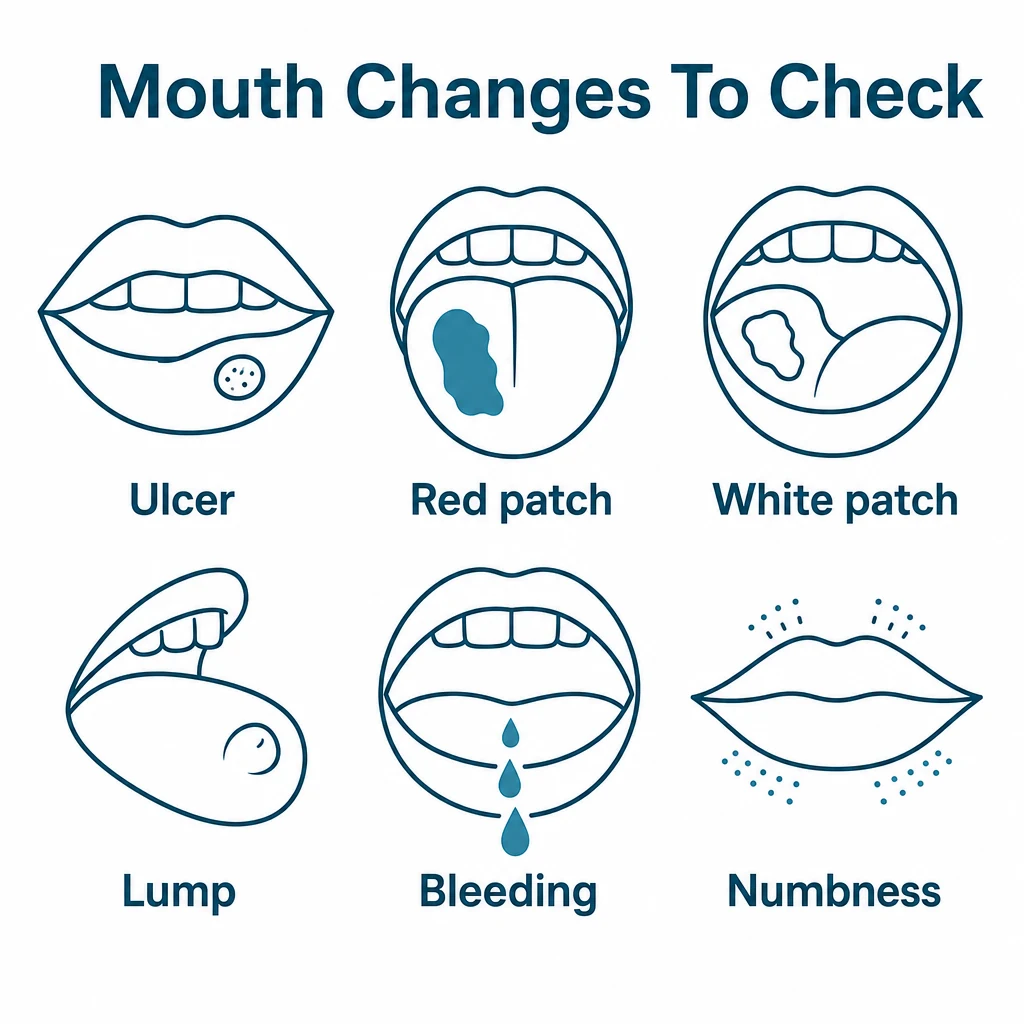
- An ulcer that does not heal, especially if it lasts for around three weeks or more.
- Red or white patches on the tongue, gums, cheeks, palate or floor of the mouth.
- A lump, swelling or thickened area inside the mouth, on the lips, or in the neck.
- Unexplained bleeding, numbness or tenderness that does not settle.
- Difficulty chewing, swallowing, speaking or moving the tongue.
- A change in how teeth meet, or dentures, crowns or bridges suddenly feeling uncomfortable.
- A persistent sore throat, hoarseness or ear discomfort without a clear cause.
These symptoms do not automatically mean something serious, but they are good reasons to book a professional assessment.
Risk factors and everyday irritations
Mouth cancer can affect people with different lifestyles, but some factors can increase risk. Tobacco use, including smoking, is an important one, and alcohol can also contribute. If you smoke and would like support to stop, discussing it with your dental team can be a positive first step because oral health and prevention are closely linked.
Other mouth changes may come from everyday causes. A sharp tooth edge, a broken filling, a rough crown margin, or a bridge that traps food can irritate the soft tissues. If you have dental restorations, your dentist can check whether they are smooth, well-fitting and easy to clean. You can learn more about restorative options such as dental crowns and dental bridges if repair or replacement is ever needed.
Good plaque control also helps reduce inflammation, soreness and bleeding. Regular dental hygiene appointments support healthier gums and make it easier to notice changes that are not simply due to irritation.
What happens during a mouth cancer screening
A screening is usually straightforward and comfortable. Your dentist will ask about your general health, any symptoms, how long they have been present, and whether anything makes them better or worse.
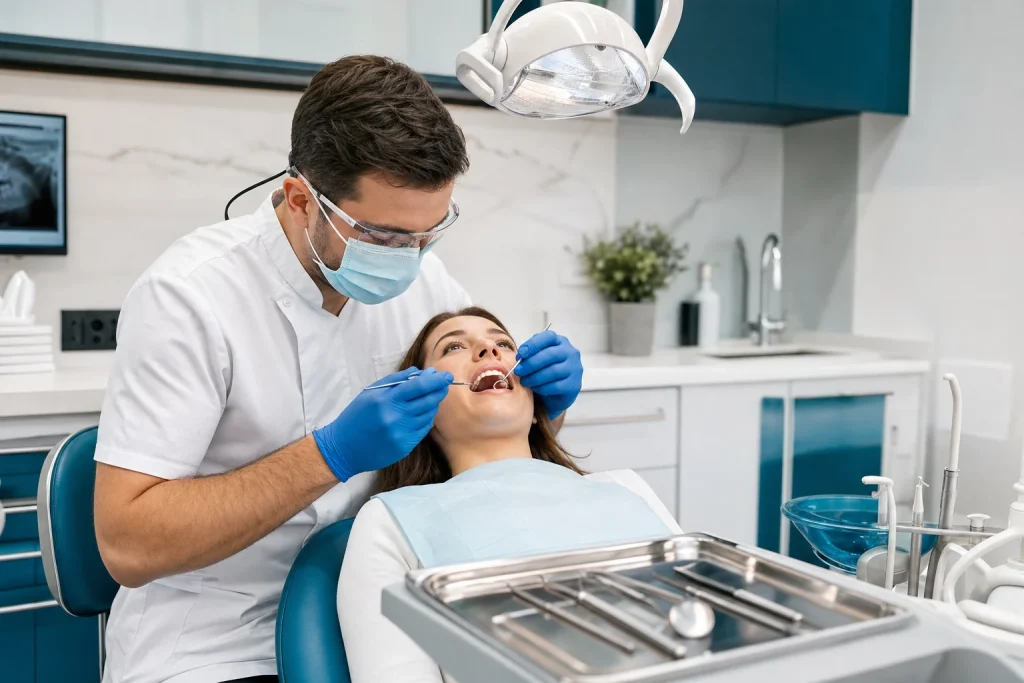
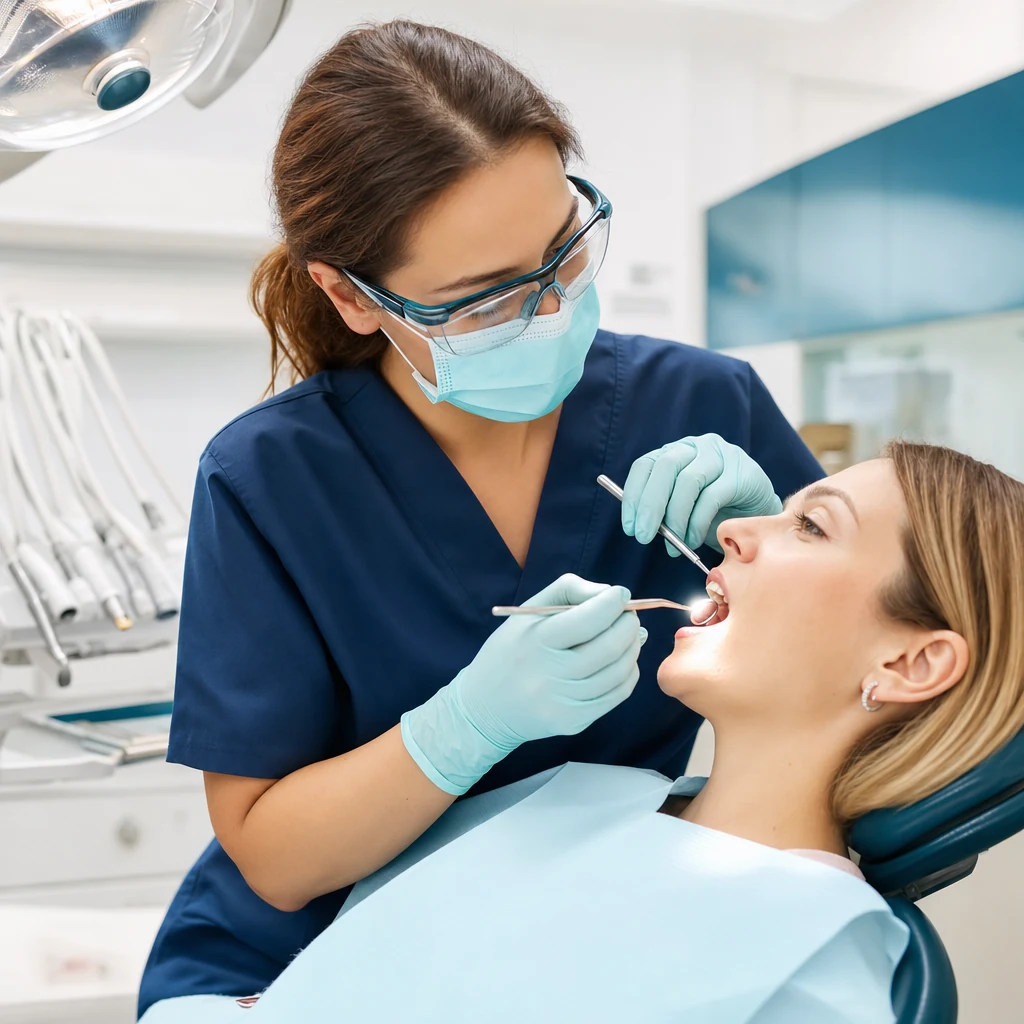
They will then examine the soft tissues of your mouth under good clinical lighting. This may include gently moving the tongue, checking the cheeks and lips, looking at the palate and floor of the mouth, and feeling around the jaw or neck for any unusual swelling.
If a change appears minor and has an obvious cause, your dentist may suggest removing the source of irritation and reviewing the area. If they feel further assessment is appropriate, they can explain why and arrange or recommend referral. The aim is not to alarm you; it is to make sure persistent or unexplained changes are taken seriously.
When to book rather than wait
It is sensible to book if something feels unusual and has not settled. This is especially true if the change is painless, because people often assume that serious issues must hurt. Many harmless conditions can be uncomfortable, while some concerning changes may be subtle.
You should also arrange a check before starting treatment that changes the appearance or function of the mouth. For example, if you are considering cosmetic dentistry, your dentist will want the mouth to be healthy first. A clear baseline helps ensure any planned care is safe and suitable.
Families can build this awareness early. Children are far less likely to need mouth cancer screening, but routine visits help them understand what a healthy mouth looks and feels like. Advice on children’s teeth can also support good habits for the whole household.
How to keep an eye on your mouth at home
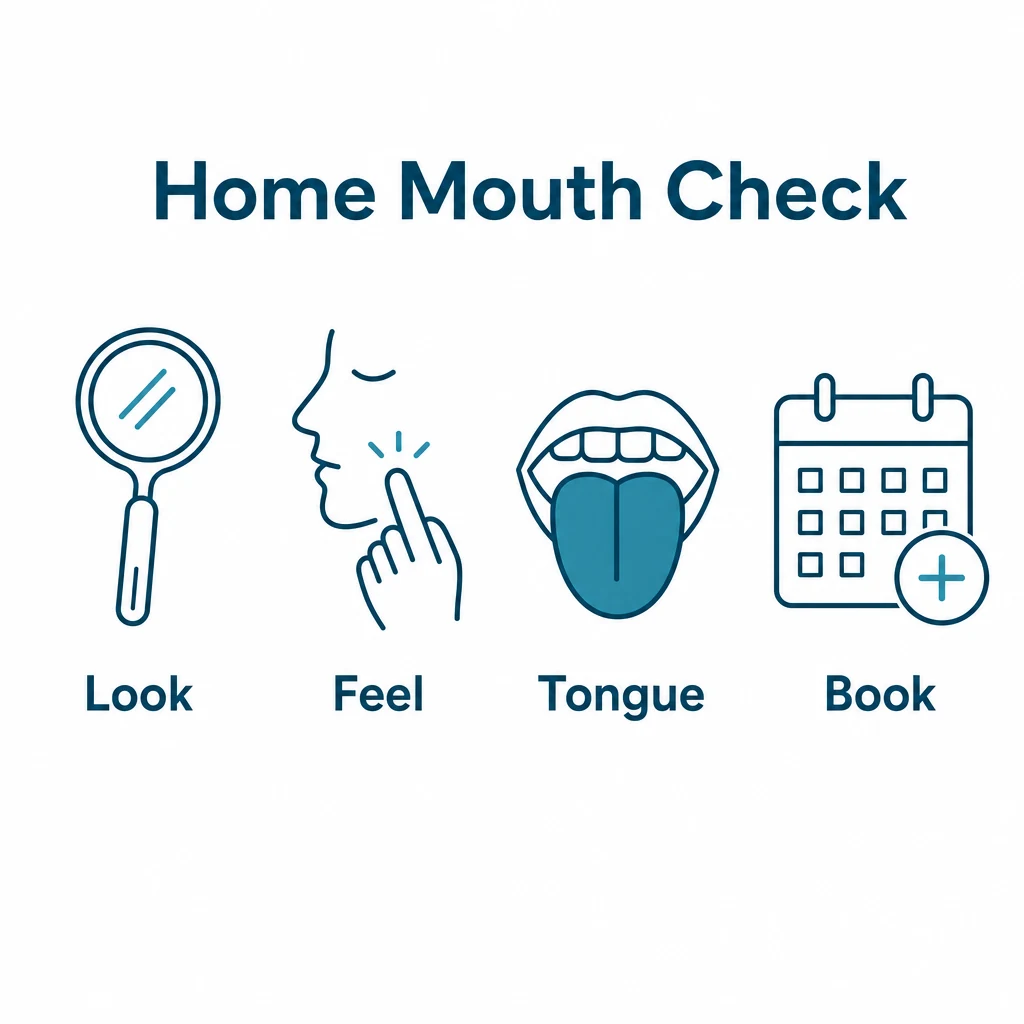
Between dental visits, get to know what is normal for you. After brushing, you can look at the lips, tongue, cheeks and gums in a mirror. You are not trying to diagnose anything; you are simply noticing changes early.
Keep an eye on ulcers, patches, lumps, bleeding spots, numb areas, or changes in speech and swallowing. If a sharp tooth, filling or appliance is rubbing, do not keep tolerating it. Dental adjustment can often make the area more comfortable and allow tissues to heal.
If you are unsure, it is better to ask. You can use the appointments page to arrange a check and explain what you have noticed.
- Persistent ulcers, red or white patches, lumps and unexplained soreness should be checked by a dentist.
- Mouth cancer screening is a calm, professional examination of the soft tissues, not just the teeth.
- Smoking, alcohol and ongoing irritation can increase concern, but many mouth changes have manageable causes.
- If a change lasts around three weeks or feels unusual for you, book a dental assessment.
Frequently asked questions
Does a mouth ulcer mean I have mouth cancer?
Usually not. Mouth ulcers are common and often heal on their own. However, an ulcer that does not heal, keeps returning in the same place, or looks unusual should be checked.
Will screening be uncomfortable?
A screening is generally simple and gentle. Your dentist looks carefully at the soft tissues and may feel around the jaw or neck for swelling.
Can my dentist refer me if needed?
Yes. If your dentist sees something that needs further assessment, they can explain the concern and guide you on the appropriate referral route.
How often should I check my own mouth?
A quick look every so often after brushing is helpful. If you notice a change that persists or worries you, do not wait for your next routine visit.
Concerned about a mouth change?
If something looks or feels different, our dental team can provide a reassuring assessment and advise on the next step.