Dental implants have become a trusted and long-lasting solution for individuals with missing teeth, offering both functional and aesthetic benefits.
Whether you’ve lost a tooth due to decay, injury, or gum disease, implants provide a stable and natural-looking replacement that can significantly improve your confidence and quality of life.
If you’re considering dental implants, it’s natural to have questions about what the process involves.
In this guide, we’ll walk you through each stage of the treatment, from the initial consultation to the final restoration, so you know exactly what to expect on your journey towards a healthier, complete smile.
Initial Consultation and Assessment
The dental implant journey begins with a thorough consultation. During this visit, your dentist will carry out a detailed examination of your mouth, including X-rays and possibly a 3D scan, to assess the condition of your teeth, gums, and jawbone.
This helps determine whether you’re a suitable candidate for implants and whether any preparatory treatment is needed.
You’ll also discuss your medical history, lifestyle, and goals for treatment. This is the perfect time to ask questions and voice any concerns you might have.
Based on the findings, your dentist will create a bespoke treatment plan, outlining each step clearly so you feel informed and confident moving forward.
Preparatory Procedures (If Required)
In some cases, preparatory procedures are necessary before the implants can be placed. For instance, if you still have a damaged or decayed tooth in the area, it may need to be extracted.
Tooth removal is typically straightforward and performed under local anaesthetic, with time allocated for healing before moving on to the next stage.
Another common preparatory step is bone grafting. If your jawbone lacks the necessary density to support an implant, a small graft may be required to strengthen the area.
This helps ensure the long-term success of the implant. Healing time after bone grafting can vary, but it’s a crucial investment in achieving a stable foundation for your new tooth.
Dental Implant Placement Surgery
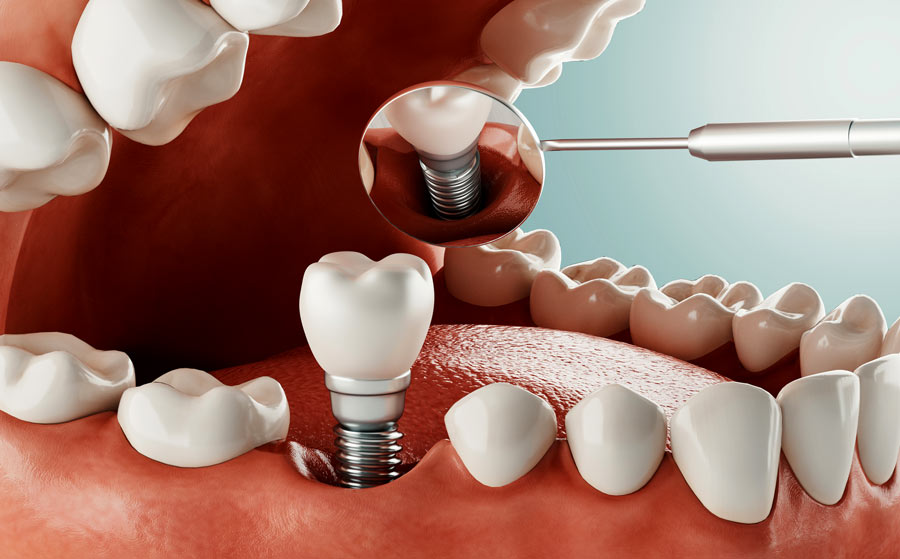
Once the jaw is ready, the next step is the surgical placement of the dental implant. This involves inserting a small titanium post into the jawbone, which acts as an artificial tooth root.
The procedure is carried out under local anaesthetic, and sedation options are available if you’re feeling particularly anxious.
Some swelling, mild discomfort, or bruising is to be expected afterwards, but these side effects usually subside within a few days. Your dentist will provide detailed aftercare instructions to help you recover comfortably.
Maintaining good oral hygiene and sticking to soft foods in the initial days can help speed up the healing process.
Healing and Osseointegration Phase
Following surgery, your implant needs time to bond with the jawbone in a process called osseointegration.
This phase is essential, as it ensures the implant becomes securely anchored, functioning much like a natural tooth root. Healing typically takes between three and six months, depending on your overall health and individual response.
During this time, it’s important to attend follow-up appointments so your dentist can monitor your progress. In some cases, a temporary crown or healing cap may be used to maintain the appearance of your smile while the implant integrates.
Patience during this stage is key, as successful osseointegration lays the groundwork for a long-lasting result.
Abutment Placement
Once osseointegration is complete, the next step is fitting the abutment. This small connector piece links the implant to the final crown. The procedure is relatively minor and often involves exposing the implant beneath the gum so the abutment can be attached.
This is typically done under local anaesthetic and requires only a short recovery time.
After the abutment is in place, the surrounding gum tissue needs to heal properly before the final crown is fitted. This allows the gums to shape naturally around the abutment, contributing to a more realistic and aesthetically pleasing result.
Your dentist will take impressions at this stage to begin crafting your permanent crown.

Final Restoration: Fitting the Crown
The last stage of the implant process is placing the custom-made crown. This crown is designed to blend seamlessly with your natural teeth in terms of shape, size, and colour.
Your dentist will ensure it fits comfortably and aligns correctly with your bite, making any necessary adjustments during the fitting appointment.
Once secured to the abutment, your new crown will look and function just like a real tooth. You’ll be able to eat, speak, and smile with confidence again.
The precision and care that go into crafting the final restoration ensure that your implant not only feels natural but also enhances the overall appearance of your smile.
Aftercare and Long-Term Maintenance
Caring for your dental implant is straightforward, but it’s essential for long-term success. Regular brushing and flossing, along with routine dental check-ups, will help prevent gum disease and keep the surrounding tissues healthy.
Although implants don’t decay, they still require the same attention as natural teeth to maintain stability and cleanliness.
Avoiding smoking and limiting excessive alcohol intake can also support better implant health. With proper care, dental implants can last for decades, making them a worthwhile investment.
Your dentist will provide personalised advice on how to maintain your new smile and may recommend professional hygiene treatments to support lasting results.
Conclusion
Undergoing dental implant treatment is a multi-step process, but one that offers exceptional, long-lasting results.
From initial assessment to final restoration, each stage is carefully planned and tailored to suit your individual needs, ensuring a comfortable and predictable experience.
If you’re ready to restore your smile and confidence with dental implants, the first step is booking a consultation.
With expert care and modern techniques, your journey to a stronger, more beautiful smile is well within reach.