If you’ve been thinking about improving your smile but feel unsure which treatment to choose, you’re in good company. The choice between composite bonding and veneers is one of the most common questions we hear at Portland Street Dental Care. Both treatments can genuinely transform how your teeth look, but they work in different ways and suit different situations.
This guide will walk you through exactly what each treatment involves, how they compare on durability and cost, and how to work out which one makes the most sense for you. Just honest, practical advice so you can make a confident decision.
What Is Composite Bonding?
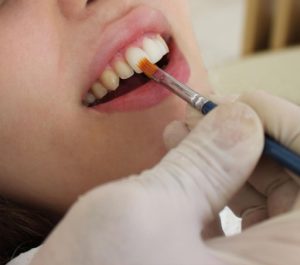
Composite bonding is a cosmetic dental treatment where we apply a tooth-coloured resin directly onto the surface of your teeth. Think of it like sculpting; we build up the resin by hand, shape it carefully to match your natural teeth, and then harden it using a special curing light.
The whole process is minimally invasive. In most cases, we don’t need to remove any of your natural tooth enamel, which means the treatment is reversible and can usually be completed in a single appointment. There’s no drilling involved, and the vast majority of patients don’t need anaesthetic.
Composite bonding works particularly well for:
- Chipped or slightly cracked teeth
- Small gaps between teeth
- Mild discolouration that doesn’t respond to whitening
- Teeth that are slightly uneven or misshapen
- Minor repairs after an accident or knock
Because the resin is matched to the shade of your existing teeth, the result blends in naturally. For many people, it’s the quickest and most affordable route to a noticeably better smile.
What Are Veneers?
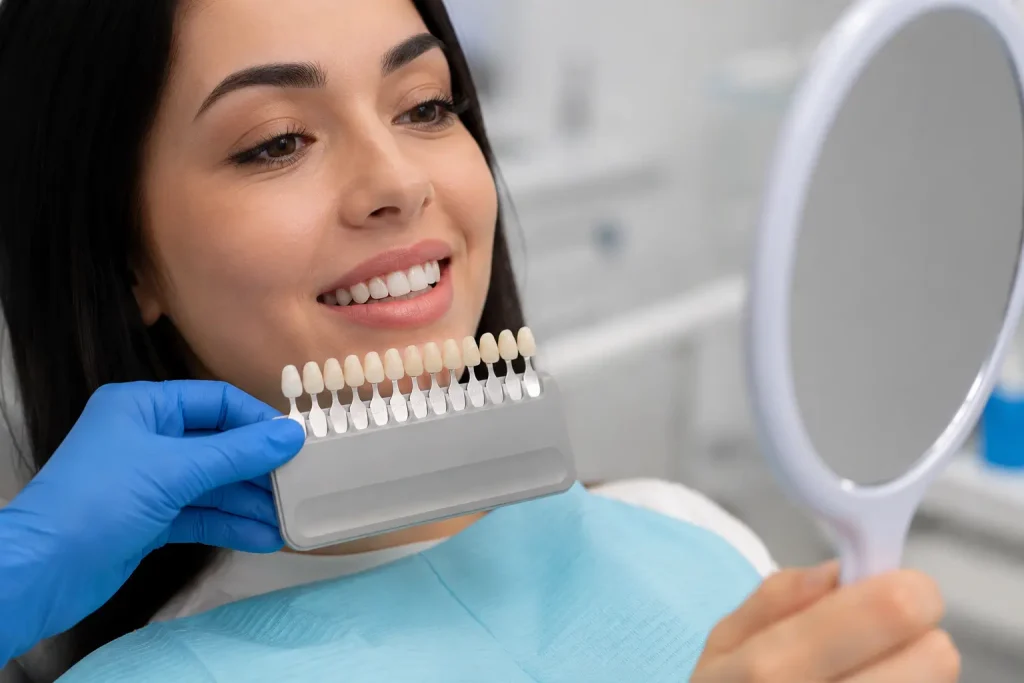
Veneers are ultra-thin shells typically made from porcelain or ceramic that are custom-made in a dental laboratory and bonded to the front surface of your teeth. Unlike composite bonding, veneers are a two-appointment process. At the first visit, we prepare the teeth by removing a very thin layer of enamel (usually around 0.5 mm) so the veneer sits flush and looks natural. We then take impressions and fit temporary veneers while the permanent ones are crafted. At the second appointment, the finished veneers are bonded into place.
Because enamel is removed during preparation, veneers are considered a permanent treatment. This is an important distinction and something we always discuss thoroughly before recommending them.
Our porcelain veneers are particularly popular for people who want a comprehensive, long-lasting smile makeover. Porcelain closely mimics the natural translucency of tooth enamel, which gives it an exceptionally realistic, high-quality finish.
Veneers are best suited for:
- Severely stained teeth that whitening cannot fix
- Teeth with worn or damaged enamel
- Larger gaps or significant size differences between teeth
- Multiple teeth that need reshaping as part of a full smile transformation
- Minor misalignments (though orthodontic options may be more appropriate for moderate to severe cases)
The Key Differences: A Clear Comparison
Understanding how these two treatments differ will help you have a much more focused conversation with us during your consultation. Here’s a straightforward breakdown:
Factor | Composite Bonding | Porcelain Veneers |
Material | Tooth-coloured resin applied by hand | Custom-made porcelain or ceramic shells |
Appointments needed | Usually one | Two or more |
Enamel removal | None or minimal | Yes – irreversible |
Reversible? | Yes | No |
Lifespan | 4–7 years on average | 10–15+ years with good care |
Stain resistance | Moderate – can stain over time | High – porcelain resists staining well |
Cost | More affordable | Higher upfront investment |
Best for | Minor repairs and enhancements | Full smile transformations |
Neither treatment is universally better than the other. The right choice depends entirely on what you want to achieve and how your teeth look now.
How Long Does Each Treatment Last?
This is one of the questions we get asked most often, and it’s a fair one — you want to know you’re getting value for your money.
Composite bonding typically lasts between four and seven years. With excellent care, some patients get closer to eight or nine years from their bonding before it needs refreshing. However, composite resin is a softer material than porcelain, which means it’s more susceptible to chipping, surface wear, and staining — particularly from coffee, red wine, and tobacco.
Porcelain veneers, when looked after properly, can last well over a decade. Many patients enjoy their veneers for 15 years or more before any replacement is needed. The porcelain surface is far more resistant to staining and doesn’t wear down as quickly under normal use.
That said, longevity for both treatments depends heavily on your habits. Teeth grinding (bruxism), biting nails, chewing pens, or frequently consuming staining foods and drinks will shorten the lifespan of either option. If you grind your teeth at night, we’ll likely recommend a protective mouthguard regardless of which treatment you choose.
Good dental hygiene plays a big role too. Keeping your gums healthy and your teeth clean helps both composite bonding and veneers stay in good condition for longer.
What Does Each Treatment Cost?
Cost is a practical consideration, and we believe in being transparent about it.
Composite bonding is the more affordable of the two. Because it’s completed in a single appointment using materials that don’t require laboratory fabrication, the cost per tooth is significantly lower. It’s a great entry point into cosmetic dentistry for people who want visible results without a large upfront commitment.
Porcelain veneers involve laboratory fees, multiple appointments, and a more complex preparation process, which is reflected in the price. The cost is higher per tooth, but many patients find that the durability and quality of the result justifies the investment over time. When you factor in that veneers often last twice as long as bonding, the long-term cost difference narrows considerably.
We’d always encourage you to come in for a consultation before making any decisions based on cost alone. The most economical choice isn’t always the one with the lower price tag; it’s the one that best fits your specific situation and is least likely to need early replacement or additional work.
Composite Bonding vs Porcelain Veneers: The Honest Pros and Cons
Composite Bonding
What works well:
- Fast results are often obtained in a single visit
- Non-invasive and reversible
- No enamel removal required
- Repairs are straightforward if chips or stains develop
- Lower cost makes it accessible for more people
What to consider:
- Shorter lifespan than porcelain
- More prone to staining over time
- Can chip under pressure
- May not achieve the same level of translucency as porcelain for a full smile transformation
Porcelain Veneers
What works well:
- Exceptionally natural appearance with lifelike translucency
- Highly stain-resistant and durable
- Lasts significantly longer than composite bonding
- Ideal for a complete, dramatic smile transformation
- Minimal maintenance beyond normal oral hygiene
What to consider:
- Requires permanent removal of enamel
- Cannot be undone once the preparation is done
- Higher upfront cost
- Requires two or more appointments
Which Is the Better Choice for Chipped Teeth?
If you’ve chipped a tooth, composite bonding is almost always the first treatment we’d explore. It’s quick, painless, highly effective for small chips, and the result looks completely natural. We can often repair a chipped tooth in a single appointment, and you’ll leave the same day with a tooth that looks as good as it did before, sometimes better.
Where a chip is severe enough to affect a significant portion of the tooth, or where you also want to address the colour or shape of surrounding teeth at the same time, we might discuss whether a veneer would give you a more complete and lasting outcome.
If your tooth has been damaged suddenly, it’s worth knowing that we also offer emergency dental care for urgent situations.
What About Composite Veneers? Are They Different?
Yes, and it’s a distinction worth explaining, because it causes a lot of confusion.
Composite veneers are different from composite bonding, even though both use the same resin material. Composite veneers cover the entire front surface of a tooth (like a porcelain veneer does) but are applied directly by hand rather than being crafted in a laboratory. They’re less expensive than porcelain veneers and require little to no enamel removal, but they sit somewhere between standard composite bonding and porcelain veneers in terms of durability and aesthetic quality.
Porcelain veneers, made in a laboratory to precise specifications, offer the highest level of finish. They’re individually designed to fit your teeth and are considerably more resistant to staining and wear over time.
Common Mistakes to Avoid When Choosing Between Treatments
We’ve seen patients make decisions they later regret, and we want to help you avoid that. Here are the most common pitfalls:
Choosing based on cost alone. Composite bonding is cheaper upfront, but if your teeth need a more substantial transformation, starting with bonding can mean paying twice: once for the bonding and again when it needs replacing or upgrading to veneers.
Skipping teeth whitening beforehand. If you’re considering either treatment and your natural teeth are discoloured, we recommend whitening first. Both composite resin and porcelain are colour-matched at the time of application. If you whiten afterwards, your natural teeth lighten but the restorations don’t, leaving a mismatch.
Not addressing underlying gum health. Any cosmetic work we do is only as good as the foundation it sits on. If your gums are inflamed or unhealthy, we’ll always recommend treating that first. Healthy gums are essential for any cosmetic treatment to look its best and last as long as possible. You can learn more about keeping your gums in great condition on our healthy gums page.
Overlooking alignment issues. If your teeth are noticeably misaligned, veneers or bonding might not be the right starting point. Invisalign or Spark clear aligners could give you a better long-term result, with or without cosmetic treatments afterwards. We’ll always give you an honest view on this.
How to Decide: A Simple Framework
When patients come to us unsure which direction to take, we usually ask a few key questions:
What specifically bothers you about your smile? If it’s one or two minor issues — a chip, a small gap, or slight discolouration — composite bonding is likely the most efficient solution. If you want a wholesale change to the look of your smile across multiple teeth, veneers are worth the conversation.
How long do you want the result to last? If you want something you can largely forget about for a decade or more, porcelain veneers are the stronger investment. If you’re happy to revisit the treatment every several years, or you’re not ready for a permanent commitment, bonding gives you flexibility.
Are you comfortable with a permanent change? Because veneer preparation involves removing enamel, it cannot be reversed. This is something we take seriously, and we won’t recommend veneers unless we’re confident they’re genuinely the right fit for you.
What’s your budget? Both treatments are excellent options at their respective price points. We’ll never push you towards the more expensive route if bonding will achieve what you’re looking for.
Ready to Explore Your Options?
There’s no single answer to which treatment is right for you; it depends on your teeth, your goals, and how much of a commitment you’re ready to make. What we can promise is that we’ll always give you a straightforward, pressure-free assessment and explain every option clearly.
If you’d like to find out more about what we offer, our cosmetic dentistry is a good starting point. Or, if you’re ready to take the next step, we’d love to hear from you.
Book a consultation with us at Portland Street Dental Care and let’s find the right path to a smile you’re genuinely proud of.