Choosing between Invisalign and braces is one of the most common questions we hear in practice. Both options can straighten your teeth and improve your smile, but they work in different ways and suit different people.
In this guide, we explain the key differences in simple terms. We will help you understand costs, treatment time, comfort, and results so you can make a confident decision.
What is the difference between Invisalign and braces?
Before comparing them, it helps to understand how each treatment works.
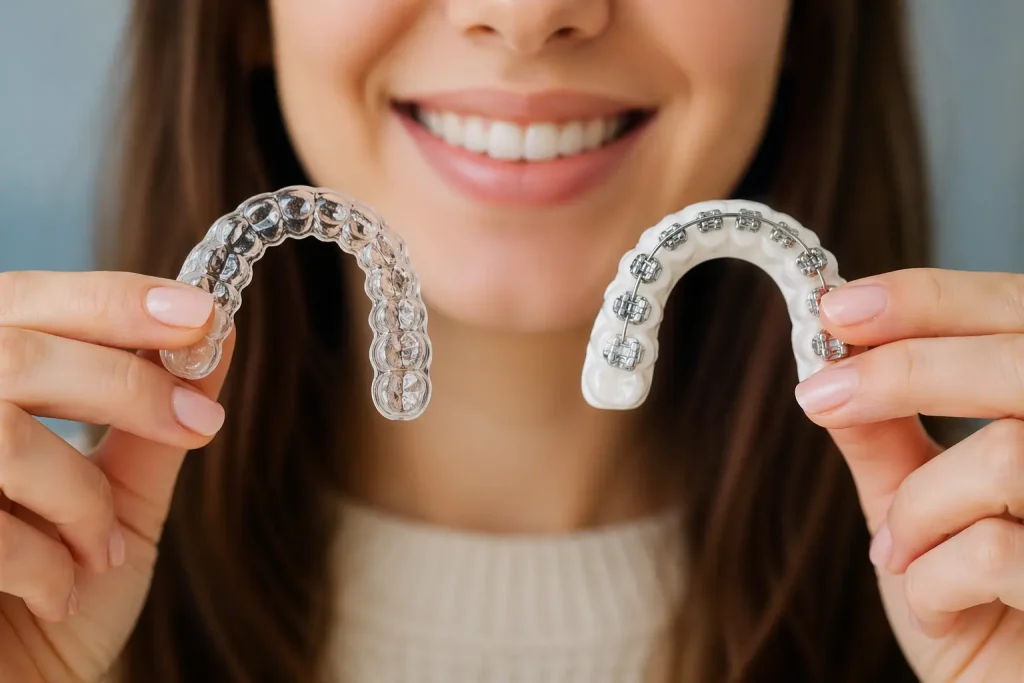
Braces use small brackets and wires fixed to your teeth. These apply steady pressure to move teeth into the correct position over time.
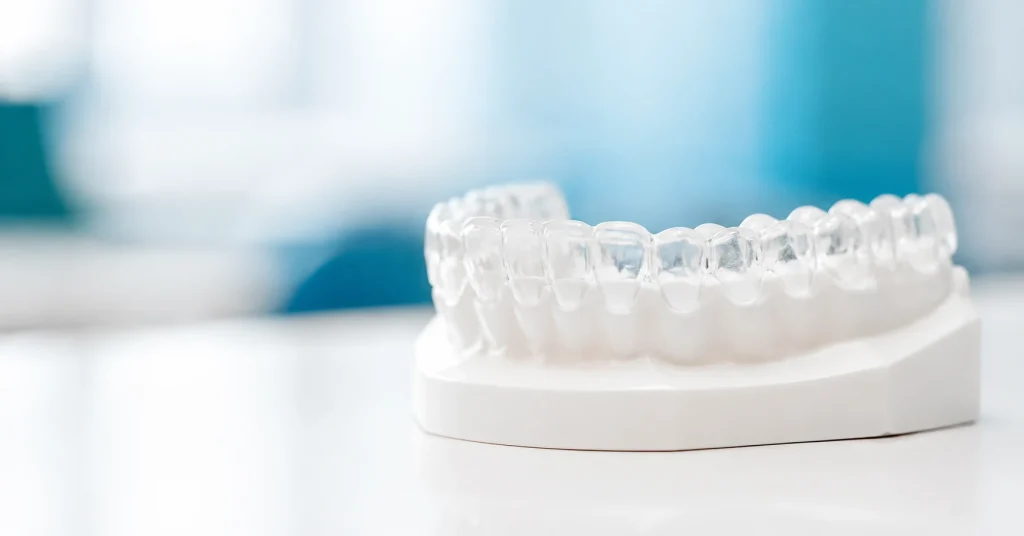
Invisalign uses clear plastic aligners. These are custom-made trays that you wear over your teeth and change every one to two weeks.
Why this decision matters
Crooked or misaligned teeth are not just about appearance. They can lead to:
- Difficulty cleaning teeth properly
- Higher risk of decay and gum issues
- Jaw discomfort or bite problems
Choosing the right treatment early can improve both your oral health and confidence.
Invisalign vs braces: which is better for you?
There is no single answer. The best option depends on your teeth, lifestyle, and expectations.
We always guide patients based on what will give the safest and most predictable result, not just what looks better.
Clear aligners vs braces: key differences
Appearance
Invisalign is almost invisible. Most people will not notice you are wearing aligners.
Braces are more visible, especially metal ones, although ceramic options are less noticeable.
Comfort
Invisalign is smooth and does not have wires or brackets. This means less irritation inside your mouth.
Braces can feel uncomfortable at first and after adjustments, but this settles over time.
Eating and lifestyle
With Invisalign, you remove aligners before eating. You can enjoy most foods as normal.
With braces, some foods must be avoided to prevent damage.
Cleaning your teeth
Invisalign makes brushing easier because you remove the aligners.
Braces require extra care to clean around wires and brackets.
For support with maintaining oral health during treatment, we always recommend regular dental hygiene visits.
Invisalign vs metal braces: treatment time
Treatment time depends on how complex your case is.
- Invisalign typically takes 6 to 18 months for mild to moderate cases
- Braces usually take 12 to 24 months, especially for more complex alignment
So when patients ask, “Which is faster, Invisalign or braces?”, the honest answer is that it depends on the problem being treated.
Invisalign vs braces results
Both treatments can deliver excellent results when used correctly.
However:
- Braces are often better for complex cases, such as severe crowding or bite issues
- Invisalign works well for mild to moderate alignment problems
The most important factor is proper planning and regular monitoring.
Invisalign benefits and drawbacks
Benefits
- Nearly invisible appearance
- Removable for eating and cleaning
- More comfortable for many patients
- Fewer emergency visits
Drawbacks
- Must be worn 20–22 hours daily
- Requires discipline and consistency
- Not suitable for all complex cases
Braces: pros and limitations
Advantages
- Suitable for all types of alignment issues
- Very precise control over tooth movement
- No need to remember to wear them
Limitations
- More visible
- Food restrictions
- Cleaning takes more effort
Invisalign vs braces cost
Cost is often one of the biggest deciding factors when choosing between treatments. While prices can vary, it helps to have a rough idea of what to expect.
In the UK, typical price ranges are:
- Braces: around £2,000 to £5,000
- Invisalign: around £3,000 to £5,500
These are average estimates. The exact cost can be higher or lower depending on your specific needs.
Several factors affect the final price:
- The complexity of your case
- How long your treatment takes
- The type of braces you choose (metal, ceramic, or hidden)
- Whether additional treatments are needed
For example, a simple alignment case may cost much less than a case that involves bite correction or significant movement.
It is also worth noting that Invisalign can sometimes appear more expensive upfront, but many patients value the comfort, appearance, and flexibility it offers during treatment.
We always advise patients to look beyond just the price. The right treatment should give you safe, long-lasting results and suit your lifestyle, not just your budget.
Braces or Invisalign for adults
Many adults prefer Invisalign because it is discreet and fits around work and social life.
However, if your case is more complex, braces may still be the better option.
We often combine treatments with other services, such as cosmetic dentistry to achieve the best final result.
Invisalign vs braces for teens
Both options can work well for teenagers.
Invisalign can be a good choice if the patient is responsible enough to wear aligners properly.
Braces are often recommended for younger patients who may forget or lose aligners.
For younger patients, we always assess suitability carefully through our children’s dental care services.
Step-by-step: how treatment works
Invisalign process
- We scan your teeth digitally
- A custom treatment plan is created
- You receive a series of aligners
- You change aligners every 1–2 weeks
- We monitor progress regularly
Braces process
- Brackets are fixed to your teeth
- Wires are adjusted over time
- Regular check-ups are required
- Teeth gradually move into place
- Braces are removed after completion
Both processes require commitment and regular reviews.
Real example: choosing the right option
A working professional with mild crowding may choose Invisalign to keep treatment discreet.
A patient with severe bite issues may benefit more from braces for better long-term results.
This is why a personalised consultation is always important.
Common mistakes to avoid
Many people make decisions based on appearance alone. This can lead to poor outcomes.
Avoid these mistakes:
- Choosing Invisalign without checking suitability
- Ignoring treatment discipline requirements
- Not maintaining oral hygiene
- Delaying treatment for too long
Final thoughts
The choice between Invisalign and braces is not about which is better overall. It is about what is right for you.
A well-planned treatment will always deliver better results than simply choosing the most popular option.
Ready to improve your smile?
At Portland Street Dental Care, we take a personalised approach to every patient. We assess your teeth carefully and guide you towards the treatment that will give the best long-term result.
Whether you are considering aligners, braces, or a full smile makeover, we are here to help.
If you are unsure where to start, book a consultation with us today. We will explain your options clearly and help you take the next step with confidence.