Bad breath can feel frustrating, especially when it doesn’t improve even after brushing. Many people ask us a simple but important question: Is plaque or tartar the reason behind it?
In this guide, we explain clearly how plaque and tartar affect your breath, what signs to look for, and what works to fix the problem long term.
What Are Plaque and Tartar?
Before we answer the main question, it helps to understand the basics.
Plaque is a soft, sticky film made of bacteria and food particles. It forms on your teeth every day.
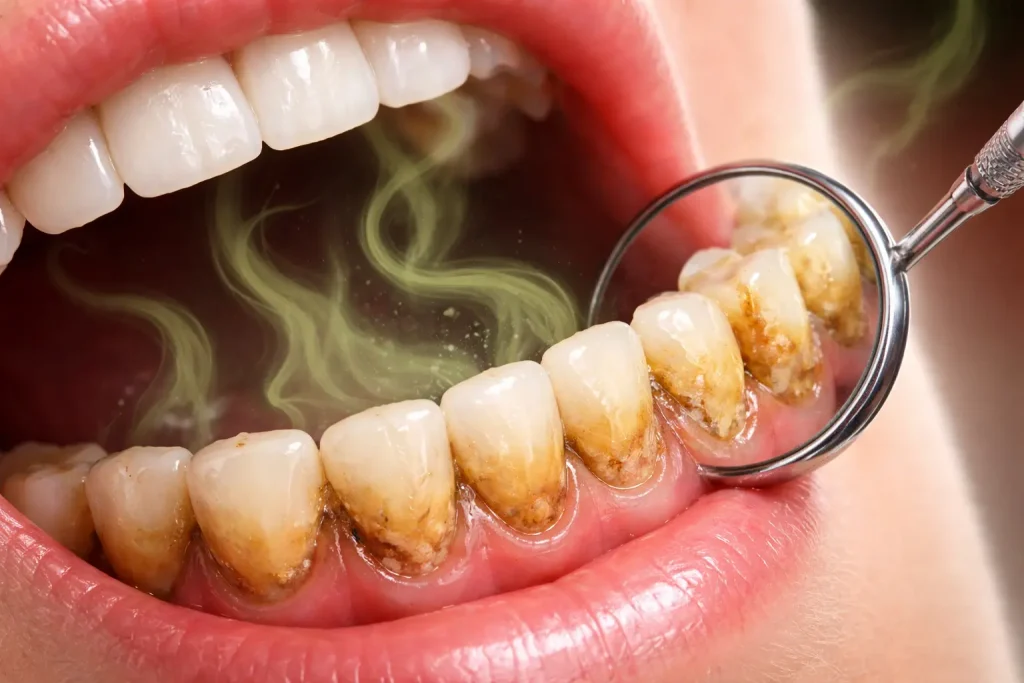
If plaque is not removed properly, it hardens into tartar (also called calculus). Tartar is rough, firmly attached to teeth, and cannot be removed by brushing alone.
This is where most problems begin.
Does Plaque Cause Bad Breath?
Yes, plaque can cause bad breath.
Plaque contains bacteria that break down food particles in your mouth. During this process, they release gases that smell unpleasant. This is the main reason behind lingering odour from teeth.
If plaque is not cleaned daily, the smell becomes more noticeable. Over time, it can lead to gum irritation and even infection, which makes the breath worse.
So, if you’ve been wondering, “Can plaque cause bad breath?”, the answer is clearly yes.
Does Tartar Cause Bad Breath?
Tartar makes the situation worse.
Once plaque hardens into tartar, it creates a rough surface where more bacteria can grow easily. This makes it harder to keep your teeth clean, even with good brushing.
Tartar also traps food and bacteria near the gum line. This can lead to gum disease, which is a common cause of persistent bad breath.
In simple terms:
- Plaque starts the problem.
- Tartar makes it harder to fix.
That is why people with tartar often notice a constant smell that does not go away easily.
Why Do Teeth Sometimes Smell?
If you’ve ever asked yourself, “why do my teeth smell?”, here are the most common reasons:
- Bacteria breaking down food in plaque
- Tartar buildup holds bacteria in place
- Gum infection or bleeding gums
- Food stuck between teeth
- Poor oral hygiene habits
In many cases, it is not just one cause. It is a combination of plaque, tartar, and gum health.
Signs Your Bad Breath Is Linked to Plaque or Tartar
You can often spot the issue early if you know what to look for.
Common signs include:
- Persistent bad breath even after brushing
- Yellow or brown deposits near the gums
- Bleeding or swollen gums
- A bad taste in your mouth
- Teeth feel rough or unclean.
If you notice these symptoms, it usually means plaque has already started to turn into tartar.
What Happens If You Ignore It?
Ignoring plaque and tartar does not just affect your breath.
Over time, it can lead to:
- Gum disease
- Tooth decay
- Receding gums
- Loose teeth in severe cases
Bad breath is often the first warning sign. Treating it early can prevent bigger dental problems later.
How to Fix Bad Breath Caused by Plaque & Tartar
The good news is that this problem is very treatable with the right approach.
Improve Daily Cleaning
Brush twice a day and clean your teeth using floss or interdental brushes. This helps remove plaque before it hardens.
Clean Your Tongue
Bacteria often sit on the tongue. Cleaning it daily can reduce odour significantly.
Stay Hydrated
A dry mouth allows bacteria to grow faster. Drinking water helps keep your mouth fresh.
Professional Cleaning Is Essential
Once tartar forms, it cannot be removed at home. A professional scale and polish is the most effective way to remove it safely.
Treat Gum Issues Early
If gums are bleeding or inflamed, targeted gum treatment can help restore oral health and eliminate odour.
Real Example (What We See Often)
We often meet patients who brush regularly but still struggle with bad breath.
In many cases, the issue is hidden tartar around the gum line. After a professional cleaning and simple hygiene changes, the improvement is noticeable within days.
This shows that brushing alone is sometimes not enough. The deeper cause needs to be addressed.
Common Mistakes to Avoid
Many people unknowingly make these mistakes:
- Relying only on mouthwash to mask smell
- Skipping flossing
- Ignoring early signs like bleeding gums
- Trying home remedies that damage enamel
- Delaying dental visits
These habits allow plaque and tartar to build up further.
Plaque vs Tartar: Quick Comparison
Feature | Plaque | Tartar |
Texture | Soft and sticky | Hard and rough |
Removal | Brushing and flossing | Professional cleaning only |
Smell Cause | Bacteria produce gases | Traps more bacteria and worsens odour |
Risk Level | Early stage | Advanced stage |
When Should You See a Dentist?
If bad breath does not improve with good oral care, it is time to seek help.
A proper dental check can identify whether plaque, tartar, or gum disease is the root cause. Early treatment is always simpler and more effective.
How Can We Help You?
At Portland Street Dental Care, we focus on treating the root cause, not just the symptoms.
We offer professional dental hygiene services, thorough scale and polish treatments, and personalised care plans to help you maintain fresh breath and healthy gums.
If you are dealing with ongoing bad breath or notice signs of plaque buildup, we are here to help you fix it properly and prevent it from coming back.
Book a visit today and take the first step towards a cleaner, fresher smile.