
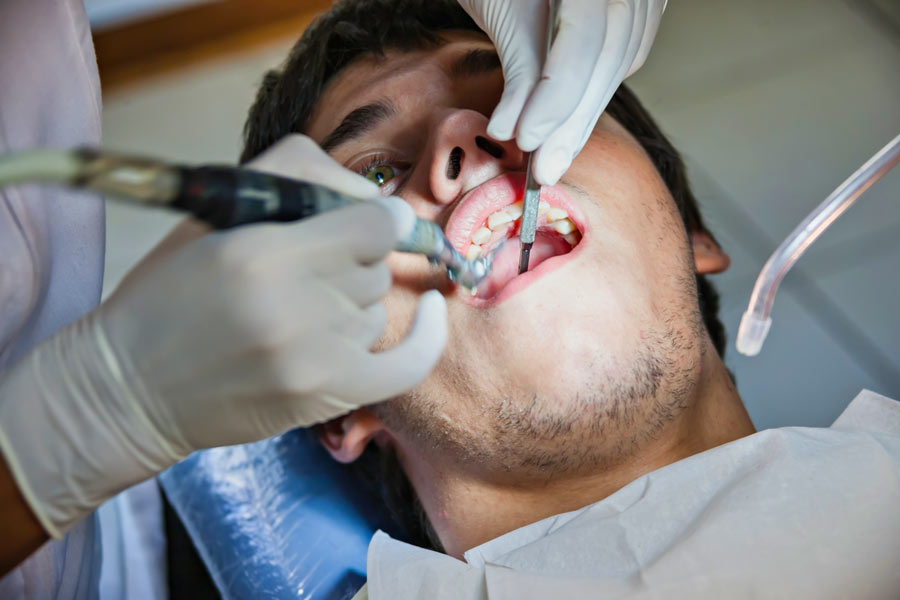
Root canal treatment, or endodontics, is required when the pulp inside a tooth becomes infected due to decay or injury. If untreated, the infection can spread through the root canal system, leading to an abscess and significant discomfort, potentially resulting in tooth loss. The procedure aims to remove the infection, clean the root, and fill it to prevent further issues. Performed under local anaesthetic, the treatment feels similar to getting a filling. Typically, it involves multiple visits, with a temporary filling first, followed by a permanent one once the infection clears. Regular dental check-ups and hygiene appointments help maintain oral health and prevent complications.
Root canal treatment, also known as endodontic therapy, is a dental procedure designed to treat infection at the centre of a tooth. This treatment aims to remove bacteria from the infected root canal, prevent reinfection, and save the natural tooth. It’s a common misconception that root canal treatments are painful; however, with modern techniques and local anaesthetics, most people experience little to no discomfort during the procedure.
After RCT and tooth settling, a full coverage restoration (eg crown) is strongly recommended. This will prevent potentials cracks and fractures in the now fragile root treated tooth
If you have been referred to an endodontist in Southampton or are experiencing ongoing tooth pain, our experienced team can provide expert assessment and treatment. An endodontist specialises in diagnosing and treating problems affecting the inside of the tooth, using advanced techniques to remove infection, relieve discomfort and preserve your natural tooth wherever possible. Seeking prompt treatment can help prevent the infection from worsening and reduce the likelihood of needing a tooth extraction.
It’s essential to recognise the symptoms that may indicate the need for a root canal treatment. Common signs include:
Severe toothache when chewing or applying pressure.
Prolonged sensitivity to hot or cold temperatures, even after the stimulus is removed.
Darkening or discolouration of the tooth.
Swelling and tenderness in nearby gums.
A persistent or recurring pimple on the gums.
If you’re experiencing any of these symptoms, it’s crucial to consult with your dentist promptly.

Examination and radiographs to see the extent of the infection. Local anaesthetic is then administered, ensuring a pain-free experience.

A small opening is made in the crown of the tooth to access the infected pulp.

Removal of the infected pulp tissue from the root canals. The canals are then cleaned, disinfected, and shaped to prepare them for filling.

The cleaned canals are filled with a biocompatible material called gutta-percha, which seals the space and prevents reinfection.

A permanent restoration, such as a crown, is usually placed at a subsequent appointment to protect the tooth and restore its function.
EXCELLENTTrustindex verifies that the original source of the review is Google. I’ve had an excellent experience with Costin and Pam at Portland Street Dentist. I decided to get braces just before turning 30, and it’s honestly one of the best decisions I’ve ever made. My teeth are now so straight, and I couldn’t be happier with the results. I was quite nervous at the start and told Costin that I really don’t like dentists or pain, but every single appointment was handled with such care and gentleness. They always made me feel comfortable and reassured throughout the whole process. I would absolutely recommend Portland Street Dentist to anyone considering braces especially if you’re feeling a little anxious like I was! I have also had other dental treatment here, and has been great service every time.Posted onTrustindex verifies that the original source of the review is Google. I honestly can’t recommend this dentist highly enough! I had Spark orthodontic treatment and the results are absolutely fantastic. My face aches from smiling so much! 😁 Pam and Costin have been incredibly welcoming from the start and the level of care they provide is exceptional. They made every appointment comfortable, reassuring, and kept me informed throughout. I now wouldn’t want to go anywhere else! Thank you both again for such brilliant results!Posted onTrustindex verifies that the original source of the review is Google. Pamela and Costin made me feel welcome and relaxed throughout the process of my dental work. All of my options were explained with pros and cons, and they went the extra mile to ensure that I would leave happy with my new smile (which I really did!). Costin is a perfectionist!Posted onTrustindex verifies that the original source of the review is Google. I had my braces fitted at Portland Street Dental and I couldn't be happier with my smile! Pamela and Costin immediately make you feel comfortable and secure! I continue staying as a long term patient! 5 stars!Posted onTrustindex verifies that the original source of the review is Google. As a nervous patient, Pamela and Costin made me feel at ease from the very beginning. I had a root canal filling, two smaller fillings and a clean. I can honestly say that it's been the best dental experience I've ever had. I would recommend them to anyone.Posted onTrustindex verifies that the original source of the review is Google. Wow what can I say costin and Pamela made me so welcome I had my teeth taken out just after lockdown and had a temporary set but were perfect I didn’t go back until 5 years later as my dentures had snapped costin and Pamela talked me through everything I had my 2 teeth cleaned impressions taken a bite test then a wax fitting I went today for my new dentures and haven’t stopped smiling thankyou so very much my confidence has hit the roof highly recommend will never go anywhere else 😁😁🌹Posted onTrustindex verifies that the original source of the review is Google. Great experience, very personal, welcoming, caring and calming. Highly recommend.Posted onTrustindex verifies that the original source of the review is Google. My experience with the practice and both Costin and Pamela was absolutely great because I felt safe, really looked after, treated with respect and kindness at all times. This is that type of place where you feel you are at the centre of their efforts and the price is a fair one compared to so many other places. Pamela and Costin worked with me for aprox 3 years now. I first had a crown made and then braces and the result of both is just amazing. Nothing was too much for them and they went beyond and above with their care and assistance so I can enjoy smiling again. Thank you both for a really meaningful experience with an outstanding result😘Posted onTrustindex verifies that the original source of the review is Google. I had a very wonderful journey with Portland Dental Care team on my journey to my lovely smile. Very nice team never encountered any appointment cancellations everything was perfect 😄😄 its like i started a week ago with them the way they are nice and efficient. Thank you againg for having me as a patient for these past 2 years.
Designed & Built by Freedom Search