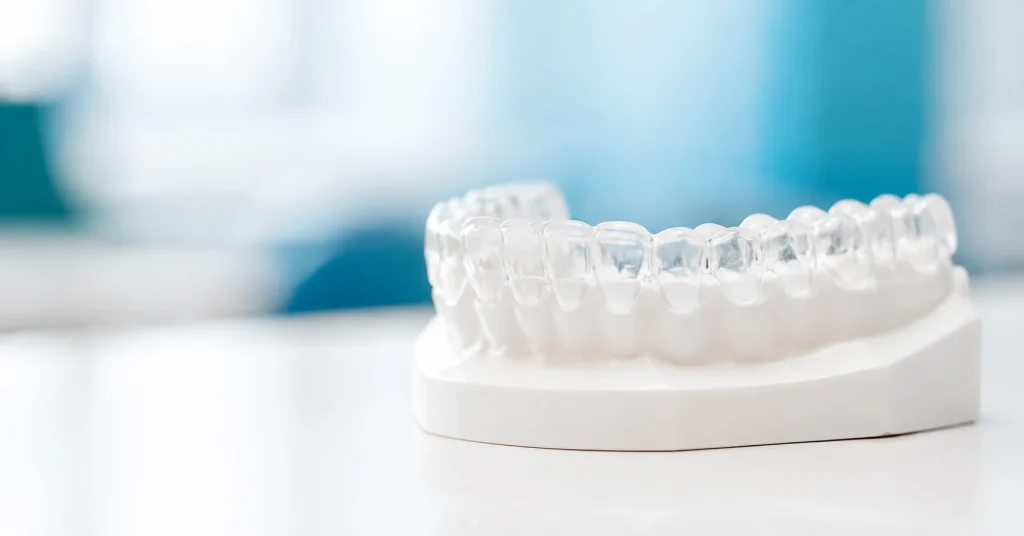

If you are considering clear aligners, it is natural to wonder how they will feel. Will your teeth ache? Will eating feel different? And how do you tell normal pressure from something your dentist should check?
Clear aligners can cause temporary tenderness, particularly when you first start treatment or change to a new set. For many people, this feels more like tightness than sharp pain. Knowing what to expect, and how to manage the adjustment, can help you feel more confident about starting.
Why do clear aligners make teeth feel tender?
Clear aligners move teeth by applying controlled pressure. Each set is shaped to guide your teeth towards their next planned position. The tissues supporting the teeth respond to that pressure, which can make them feel sensitive for a while.
You may notice a snug feeling when you put your aligners in, a dull ache across several teeth or tenderness when biting into food. Some teeth may feel more sensitive than others because different movements happen at different stages.
With Invisalign and Spark aligner treatment, your dentist plans the sequence of movements and checks your progress. The aim is controlled tooth movement, not pain, and stronger discomfort does not mean treatment is working better.
There can also be a separate settling period for your lips, cheeks and tongue. They may notice the aligner edges or small tooth coloured attachments used to help guide movement. Mild awareness often improves, but an edge that repeatedly cuts or rubs deserves attention.
How long does aligner discomfort usually last?

Tenderness is often most noticeable during the first day or two after starting treatment or moving to a new set. It commonly eases over the next few days. The initial adjustment can take around a week, although experiences vary.
- When you first start: your teeth may feel tight, and your mouth needs time to get used to wearing and removing the aligners.
- After a scheduled change: pressure can return as the next set begins guiding further movement. This usually settles within a few days.
- Between changes: aligners often feel more comfortable as your teeth adapt to that stage.
Not every set will feel the same. One may create noticeable tenderness while another feels quite comfortable. Little or no discomfort does not mean your treatment has stopped working.
The direction of change matters more than an exact deadline. Mild tenderness that steadily improves is generally reassuring. Pain that gets worse, remains significant beyond the usual settling period or returns unexpectedly should be discussed with your dentist. You do not need to wait a week if something feels wrong.
How to make the adjustment more comfortable

A few practical habits can help you manage tenderness while keeping treatment on track.
- Choose gentler foods temporarily. Eggs, yoghurt, pasta and soft cooked vegetables may be more comfortable than crunchy or chewy foods when your teeth feel sensitive. Remove your aligners before eating.
- Follow your prescribed wear schedule. Many plans involve wearing aligners for around 20 to 22 hours a day, but follow your dentist’s instructions. Repeatedly leaving them out to avoid mild pressure can make reinsertion feel tighter and affect progress.
- Remove them carefully. Use the technique your dental team demonstrates, easing them away gradually rather than pulling hard from one point. Ask for another demonstration if removal feels difficult.
- Keep your mouth and aligners clean. Brush with fluoride toothpaste and clean between your teeth daily. Follow the cleaning instructions for your aligners and avoid hot water, which can distort them.
- Ask about pain relief if needed. Paracetamol may help if it is suitable for you. Follow the packet instructions, avoid taking multiple products containing paracetamol and ask a pharmacist if you are unsure.
Do not bring forward an aligner change because a set feels comfortable, or move ahead to escape a sore area. Follow the planned sequence and ask your dentist before changing it.
If an edge rubs, your dental team may recommend orthodontic wax or adjust the aligner. Do not trim, file or reshape it yourself unless your dentist has specifically advised you how to do so.
When should you contact your dentist?

Clear aligner discomfort should generally be manageable and improve rather than intensify. Persistent or unusual pain needs checking because not every toothache during treatment is caused by tooth movement.
Contact your dental practice promptly if you notice:
- Severe pain, worsening pain or pain that repeatedly disrupts sleep.
- Strong pain focused on one tooth, especially with lingering sensitivity to hot or cold.
- A sore area or ulcer that keeps being irritated or is not healing.
- An aligner that is cracked, distorted, will not seat properly or has a sharp edge.
- New or persistent jaw pain, difficulty opening your mouth or a bite that suddenly feels uncomfortable.
Swelling, pus, fever or feeling generally unwell alongside dental pain needs urgent dental advice. If swelling affects your breathing or swallowing, seek emergency medical help immediately.
Do not force an aligner into place or assume that significant pain is something to push through. Your dentist can check the fit, your teeth and your gums, then advise whether to continue with that set or make a change. Keep your current and previous aligners available if the practice asks to see them.
What to discuss before starting treatment
A useful consultation covers comfort as well as the planned result. Tell your dentist about sensitive teeth, previous dental pain, gum problems, teeth grinding or jaw symptoms. These do not automatically rule out aligners, but they may affect the advice you need.
Ask how to insert and remove your aligners, when to change sets and who to contact if something feels uncomfortable. Understanding those details makes the first few days easier to navigate.
If you have broader concerns about daily wear, appointments or getting used to treatment, our guide to what to expect when starting Invisalign explores other common questions. You should feel comfortable asking about any part of your care, however small it seems.
- Mild pressure and tenderness are common when starting aligners or changing sets.
- Discomfort usually eases over a few days and should gradually improve.
- Careful removal, softer foods and following your wear schedule can help.
- Severe, worsening or unusual pain should be checked by your dentist.
Frequently asked questions
Does everyone experience pain with clear aligners?
No. Some people notice mild tightness, while others experience more tenderness during the adjustment period. Comfort varies between people and between sets. Your dentist assesses progress through fit and planned tooth movement, not how much discomfort you feel.
Can I leave my aligners out overnight if my teeth ache?
Avoid changing your prescribed wear schedule to manage mild tenderness. Leaving aligners out for long periods can affect their fit. If pain is significant or an aligner feels wrong, contact your dentist for advice rather than forcing yourself to wear it.
Is it normal for teeth to feel tender when eating?
Some tenderness when biting can happen after an aligner change. Softer foods may help while it settles. Sharp pain, pain concentrated in one tooth or tenderness that worsens should be checked rather than assumed to be normal.
Feel informed before you begin
If you are considering clear aligners, the team at Portland Street Dental can discuss suitability, comfort and what to expect. Bring your questions so we can help you understand your next steps.